

SPOTTING THE SLAVES WHO SERVE US
The transatlantic slave trade was one of the worst crimes in British history. Looking back from the distance we have, it seems unbelievable that it continued for so long, despite the campaigning against it. Transatlantic slavery wasn’t hiding in plain sight, it was swaggering greedily in everyone’s eyeline. Lord Nelson, whose column stands tall and proud in Trafalgar Square, spoke of ‘the damnable and cursed doctrine of Wilberforce and his hypocritical allies’. Some of the best people in our nation’s history were reviled by its elites for trying to do good.
Slavery hasn’t gone away; we all know that. It has been privatised, gone underground and mutates at speed, sensitive to social change and market forces of supply and demand in much the same way reputable businesses are, except the traffickers and gangmasters treat human beings as property to be abused at will. Not just for the obscene profit motive at hand but, I expect, because they get a kick out of the absolute control of other people.
We oppose this, along with the vast majority of people. Our shared conscience says this is wrong. And the Church opposes it because the story of slavery is written into its self-understanding. God’s first observable national cause was to save the ancient Israelites from their slavery in Pharaoh’s Egypt. It says God heard the cry of the Israelites. Everyone who suffers as a slave is heard by God. I doubt every Israelite intended God to hear their cries; most of them seemed to know very little about the God of Jacob and Joseph, but God himself suffers in the body of everyone who is abused by another. The parable of the sheep and the goats says Jesus is in every person we meet.
The New Testament writers see us as enslaved by our sin, both individually and collectively. We know how we ought to live for God, but can’t help living for ourselves. It’s so deeply rooted in the human condition to be selfish that it controls us as coercively as a slave master. This is what Jesus sets us free from by his cross. Though he has brought us into the light, it often feels like we live in the twilight, half way between darkness and light because our actions fall short.
But at least we have the liberty to figure it out. God cherishes freedom in people; he must do, otherwise we would be controlled by him, which we are not. This is another reason why slavery is so wrong. It is the antithesis of the Gospel. The slave owner spits in God’s face, usurping his throne, replacing freedom with oppression. Hardly any other social issues speaks so abusively into the heart of our faith as slavery does.
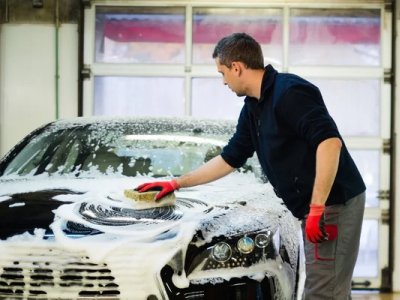
And yet we easily miss the clues. We brush past slaves in shopping arcades; they work in freezing wet car washes; they sullenly manicure our nails; they trade drugs in dark alleyways or break their backs digging potatoes or finding cockles. They wait by the sides of roads as we drive past, hunched against the early morning cold. It is estimated there are between 100,00 and 130,00 slaves in the UK today; no one can be quite sure how many. Of recorded cases in 2024, nearly one in three were children – let that sink in.
Slaves face violence routinely and usually live in poor, overcrowded conditions. They have little or no access to families in other parts of the country or world and what little contact they may have is strictly monitored. They have no idea who to alert or the space to do this. Slaves work long daily hours over seven day weeks; sabbath – God’s gift to the world – has been eliminated from their lives. They are often heavily in debt to traffickers and this debt grows arbitrarily as a way of deepening control. They lose trust in human beings, when the only human beings they relate to are cruel and merciless. As God is seen and felt most often through the kindness of others, they are more likely to feel complete spiritual abandonment. This is what it means to be broken, and how the human soul is crushed underfoot.
So why do we miss sight of a group of people who could fill Wembley stadium and more?
One reason is we are conditioned not to pay proper attention to other people in our towns and cities. Many of us see more people in one day than a person living in medieval times would have done in a life time, and the way we cope with this is to shut our senses down. Slaves just aren’t seen. But we can train ourselves and be trained to identify the signs with just a little research, and we all know how to contact the police.
Twenty-two years ago, a tragedy unfolded off the coast where I was brought up. The Morecambe Bay cockle pickers, all Chinese, drowned after being caught by rapid tides that locals know about. At least 21 lost their lives in the freezing cold waters of north west England, five thousand miles from the warm embrace of the families who loved them. It’s said at least 21, because being undocumented, there is no way of knowing for sure how many perished. One survivor, Li Hua, has made a life for himself in England. He now runs a restaurant and owns a house where he lives with his wife and family. Memories of that day continue to haunt his dreams, but Li has found fulfilment in life after the worst of experiences. His story is recounted in the book ‘Who Are We Now?’ by Jason Cowley. The story does not go into depth; after all, he had to give evidence in court against the traffickers and now lives in a witness protection scheme. But Li Hua has rebuilt his life after it was systematically broken by cruel people.
And along the way, he will have been helped by the kindness of strangers. The alertness of people who are, literally, looking out for the slaves among us.
POPULAR ARTICLES
God In The Cow Shed
2020 has been dominated by the C word. Not that C word. I mean conspiracy theory involve space. Some people believe the
Viral With The Holy Spirit
Since the tech revolution, insurgent new start-ups have enjoyed using the word ‘disruption’
Long Lost family
Some types of storytelling mess with your brain. Intentionally. Like one of those novels where you assume
Valuing Age
Lots of work is being done round unconscious bias in society, especially around gender and ethnicity